Just another WordPress site

X

CONTACT US

Great Lakes Center, SAMC 319
SUNY Buffalo State
1300 Elmwood Ave., Buffalo, NY 14222

wnyprism@buffalostate.edu
(716) 878.4708

SUBSCRIBE TO LISTSERV

Sign-Up Here

FOLLOW US

CONTACT

Oriental Bittersweet, Celastrus orbiculatus, Capsules
Oriental Bittersweet

Oriental Bittersweet

Celastrus orbiculatus

Oriental, or asiatic, bittersweet is a perennial, deciduous vine that can grow up to 60 ft. Its stems have dark brown, striated bark. The alternate leaves are elliptic to ovate, and spiral evenly around the stem. Axillary flowers bloom in May to early June yielding bright, reddish-orange fruit in the fall. Oriental bittersweet can be confused with american bittersweet, a native species, which has terminal inflorescence and orange capsules
Poison Hemlock

Poison Hemlock

Conium maculatum

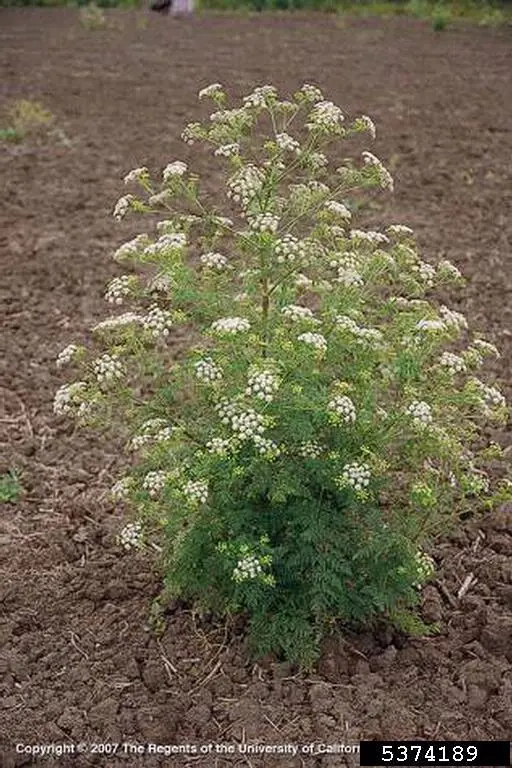
Poison hemlock is biennial herbaceous plant that grows as a rosette in the first year and grows a tall flower stalk in the second. Its fern-like leaves are at least 2 feet long and pinnately compound. The stem is hairless, hollow and speckled with purple.

Porcelain Berry

Porcelain Berry

Ampelopsis glandulosa

Porcelain berry is a perennial, deciduous vine that can grow up to 20 feet long. It produces small greenish-yellow flowers that develop into hard berries in various shades that mature to a bright blue.

Photo by Steven Flint
Purple Loosestrife

Purple Loosestrife

Lythrum salicaria

Purple loosestrife is an erect, herbaceous perennial that grows 3-7 ft. tall. It is easily identified by its showy, magenta flowers from July to September. Linear-shaped leaves grow oppositely along square stems. This aggressive plant spreads both vegetatively and by abundant seed dispersal.

Reed Canarygrass

Reed Canarygrass

Phalaris arundinacea

Reed canarygrass can reach 5 ft. in height. Its leaves are hairless, reaching up to 10” long and 1⁄4" to 1⁄3" wide. This grass has an extensive root system and spreads primarily through rhizomes, but also produces a high number of seeds.

Scotch Broom Shrub. Photo Credit: Eric Coombs, Oregon Department of Agriculture, Bugwood.org.
Scotch Broom

Scotch Broom

Cytisus scoparius

Scotch broom is a shrub with small, pea-like yellow flowers that bloom from late May to June. It grows up to 10 feet tall and its green branches are sharply angled with five ridges.

Photo by David R. Lance, USDA APHIS PPQ, Bugwood.org
Sirex (European) Woodwasp

Sirex (European) Woodwasp

Sirex noctilio

Woodwasps (or horntails) are large, full-bodied insects about 1'' to 1 1/2" long. Adult females have dark metallic blue or black bodies with orange legs. The male's head and thorax are metallic blue, and the abdomen is orange at the center and black at the base. Adults emerge from July to September.

Brachypodium slyvaticum - slender false brome
Slender False Brome

Slender False Brome

Brachypodium sylvaticum

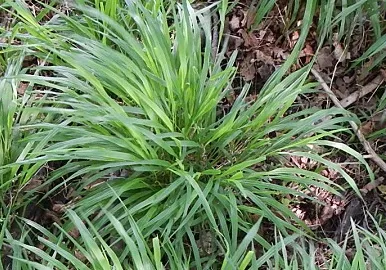
Slender false brome is a perennial grass that grows in dense clumps. This species has long, drooping, bright green leaves 5-12 mm wide, which can be covered in long, sparse hairs or may be hairless.

Spotted Knapweed

Spotted Knapweed

Centaurea stoebe

Spotted knapweed is an herbaceous biennial, although it may live for up to nine years. In its first year it grows in a basal rosette with 6-8” leaves. In every year after that, it can grow up to 3 ft. tall with flowers growing at the ends of its many branching stems.

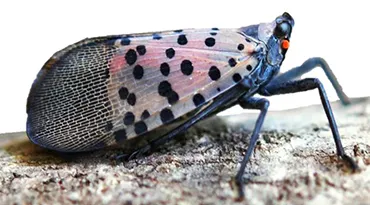
Spotted Lanternfly, Lycorma delicatula, Lateral, photo by Lawrence Barringer, Pennsylvania Department of Agriculture
Spotted Lanternfly

Spotted Lanternfly

Lycorma delicatula

Spotted lanternfly has been found in western New York, in the Buffalo area. The Department of Agriculture and Markets is asking for the public's assistance by reporting sightings.